
How to Make a Vision Board That Turns Into a Plan (Free Template + 21 Days of Steps)
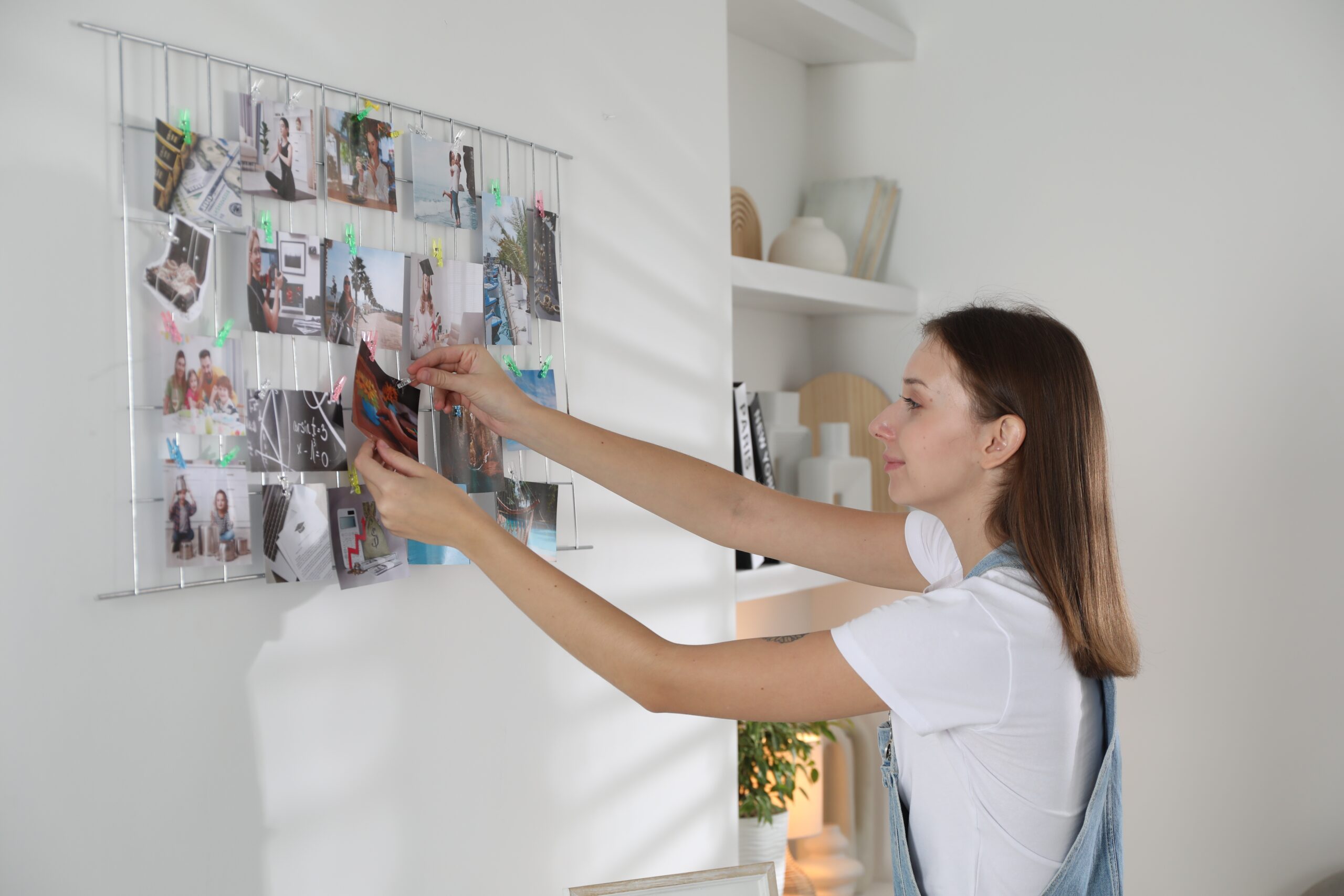
Most dreams don’t fail. They get postponed. A vision board is often where that postponing starts to feel productive. You spend a Sunday cutting out pictures, you pin it above your desk, and for a week it feels like something has begun. By February it is part of the wall.
This guide shows you how to make a vision board the usual way, then adds the part most guides leave out: a free template that turns the board into a dated plan, a plan for the thing most likely to stop you, and 21 days of small steps. One step, every day.
The short answer: to make a vision board that works, choose three to five areas of your life, pick one picture and one specific goal for each, and then do three more things. Name the obstacle most likely to get in the way. Write an if then plan for it. Give the one goal you care about most a first step you can finish today, and repeat a small step every day for 21 days.
Why most vision boards fade
The idea behind a vision board is sound. Seeing what you want every day keeps it on your mind. The problem is what usually happens next.
The psychologist Gabriele Oettingen spent years studying how people think about the future. In one well known paper (Oettingen and Mayer, 2002 (https://doi.org/10.1037//0022-3514.83.5.1198)), people who simply daydreamed about a positive future put in less effort and got poorer results, across groups as different as job seekers, students facing exams and patients recovering from hip surgery. People who expected success because of their track record did better. A later set of experiments (Kappes and Oettingen, 2011 (https://doi.org/10.1016/j.jesp.2011.02.003)) found that positive fantasies about the future lowered people’s energy.
So a board that only shows the happy ending can feel so good that it quietly replaces the work.
The same research points to the fix. When people picture the outcome and then picture the real obstacle in the way, a method called mental contrasting, they are more likely to commit and act. Add an if then plan (“If it is 7am on a weekday, then I write 200 words before I open email”) and the effect gets stronger. A meta analysis of 94 tests found that if then plans had a medium to large effect on reaching goals (Gollwitzer and Sheeran, 2006). A 2021 review of 21 studies with nearly 16,000 people found that combining the two helped goal attainment with a small to medium effect (Wang and colleagues, Frontiers in Psychology). Oettingen’s lab teaches this as WOOP: Wish, Outcome, Obstacle, Plan.
Nobody has run a large trial on vision boards themselves yet. The ingredients are well studied, though, and the template below is built from them.
How to make a vision board in 7 steps
1. Pick three to five life areas
Health, work, money, relationships, creativity, travel, learning. Choose the areas where you actually want something to change this year. Fewer areas give you a board you can read in five seconds.
2. Write one specific goal for each area
“Get fit” is hard to picture and harder to act on. “Run a 10K in March” gives you an image, a date and a first step. If a goal has no date yet, give it a rough one. You can move it later.
3. Find one picture per goal
Choose a picture of the result, as close to your real life as you can. A photo of the actual race you want to run beats a stock image of a runner. Your own photos work well because they feel possible.
4. Add a few words
One short line per picture, in your own voice. “I finish my first 10K” or “The café opens in the spring”. Keep it short enough to read at a glance.
5. Choose the one you start with
This is the step most boards skip. Every goal competes for the same evenings and weekends. Put a star on the one picture that matters most right now. The others stay on the board and wait their turn.
6. Turn the starred goal into a plan
Use the free template in the next section. It takes about ten minutes and it is where the board becomes useful.
7. Put it where you look every day
Your phone lock screen, the inside of a wardrobe door, the first tab you open each morning. Look at it for one minute a day and ask one question: what is today’s step?
The free Board to Plan template
Copy this into your notes app, a doc or the back of your board. Fill in one row for your starred goal first. Add a second row only once the first one is moving.
| Field | What to write | Your answer |
| Dream | The goal from your starred picture, in one line | |
| Date | When you want it done, even a rough date | |
| Why it matters | One honest sentence about why you want it | |
| Obstacle | The one thing in you or your routine most likely to stop you | |
| If then plan | If (obstacle or moment), then I will (small action) | |
| First step today | Something you can finish in about 15 minutes, today | |
| Daily step for 21 days | The smallest repeatable action that moves the dream | |
| Who I will tell | One person who will ask how it is going |
A few tips for filling it in:
- The obstacle should be about you. “No time” is too vague. “I scroll on my phone after the kids are in bed” is something you can plan around.
- The if then plan names a moment. A time, a place or a trigger you already have. “If I sit down with my coffee, then I open the training app.”
- The first step must fit into today. If it takes more than about 15 minutes, it is a project. Make it smaller. Our post Your Step Is Too Big (https://unlimits.com/your-step-is-too-big/) goes deeper on this.
- Tell one person. Write down who will ask you how it is going. It costs nothing and it helps.
A worked example
Here is how one row might look for someone whose board has a picture of a finished book.
- Dream: Finish the first draft of my novel.
- Date: First draft done by 30 June.
- Why it matters: I have talked about this book for six years.
- Obstacle: I get home tired and tell myself I will write at the weekend, then the weekend fills up.
- If then plan: If it is 6:30am on a weekday, then I write for 20 minutes before I check my phone.
- First step today: Open a blank document, title it, and write one paragraph about the main character.
- Daily step for 21 days: 20 minutes of writing on weekdays, one longer session on Saturday.
- Who I will tell: My sister. She will ask every Sunday.
Notice how small the first step is. A paragraph is enough to make the dream real on paper today, and today is the only day you can act on.
Exercise: the 10 minute obstacle check
Do this once for your starred goal, ideally right after you finish your board. Set a timer for ten minutes and answer each prompt in a sentence or two.
- Look at the picture. What exactly do you want? Write it in one line.
- Imagine it has happened. What is the best part? Let yourself feel it for a minute.
- Now switch. What is the one thing inside you or your routine that is most likely to stop you? Be honest and specific.
- Write one sentence: “If (obstacle shows up), then I will (small action).”
- First step. Write the smallest action you can do in the next 24 hours, and put it in your calendar.
Read your plan sentence out loud once. Then write it on a sticky note and put it on the board, right under the picture.
Your first 21 days
A plan that only lives on paper still fades. The first three weeks are where a new routine either takes root or slips back into someday. Here is a simple shape for them.
- Days 1 to 7: make starting easy. Do the first step, then repeat the smallest version of the daily step. Two minutes counts. The only goal this week is to show up. If you need help with this part, read The Two Minute Start (https://unlimits.com/the-two-minute-start/).
- Days 8 to 14: build a little. Add a few minutes or one more session. Check your if then plan. If the obstacle you named is not the one that keeps showing up, rewrite the plan for the real one.
- Days 15 to 21: look back and set the next step. Write down what moved, even the small things. Choose the next milestone and update the date on your board if you need to.
If you miss a day, do the smallest possible version of the step the next day and carry on. A missed day is information. Two missed days in a row is a signal to make the step smaller. Twenty one days will not finish most dreams, and it does not need to. It is long enough to prove to yourself that the dream can live inside an ordinary week. We cover what the research says about how long change takes in The 21 Day Myth (https://unlimits.com/the-21-day-myth/).
Vision board ideas to get you started
If you are staring at a blank board, these prompts help:
- Health: the race, the hike, the swim, or simply the photo of you walking every morning.
- Work: the business sign, the course certificate, the portfolio site, the role you want next.
- Money: the savings number, the debt paid off, the home deposit.
- Creativity: the book cover, the album, the first painting on a wall, the café you want to open.
- Learning: the language, the instrument, going back to study.
- People: the weekly dinner, the trip with your parents, the friend you want to see more.
- Adventure: the Northern Lights, the move abroad, the place you keep saving photos of.
Look through your phone’s saved photos and screenshots. You have probably been building a vision board for years without calling it one. Our Someday List (https://unlimits.com/the-someday-list/) is a good place to collect them.
Paper or digital?
Both work. Paper is more personal and the act of making it is satisfying. A digital board is easier to keep in front of you and easier to update. Many people do both: a paper board at home, and a photo of it as their phone wallpaper. The format matters far less than the plan underneath.
Where Unlimits fits
Unlimits is an AI life coach in your pocket, made for the dreams you keep putting off. It picks up exactly where your board leaves off.
- Tell your coach the dream from your starred picture. It helps you shape it into a plan with steps that fit your real week.
- Guided manifestations and mindset sessions, including sessions recorded by Paul McKenna, an Unlimits advisor and content partner. They keep the picture vivid while you do the work.
- One small step every day, your progress and your small wins, named out loud.
Your coach also checks in with you, so you do not have to remember to open an app. On the days you skip, it helps you find a smaller step instead of giving up. If you like structure, start with the free 21 Day Jumpstart and give your board three weeks of real momentum. Your dreams don’t have to wait anymore.
FAQ
How do you make a vision board step by step?
Pick three to five life areas, write one specific goal for each, find one picture per goal and add a short line of words. Then star the goal you will start with, name its main obstacle, write an if then plan, choose a first step you can do today, and put the board where you see it every day.
Do vision boards actually work?
There is no large study on vision boards themselves. Research by Gabriele Oettingen found that only daydreaming about a positive future is linked to less effort. Picturing the goal and then planning for the obstacle, known as mental contrasting with if then plans, has good evidence behind it. A vision board helps most when it leads to that kind of plan and daily action.
What should I put on a vision board?
Put one picture for each specific goal, ideally showing the result in your own life, plus a few words in your own voice. Common areas are health, work, money, creativity, learning, relationships and travel. Add the date, the first step and your if then plan for the goal you are working on now.
How many goals should a vision board have?
Three to five areas is enough for most people. Work actively on one goal at a time, or two at most, and let the others wait their turn. A full board you admire tends to move less than a short board you act on.
How do I turn my vision board into a plan?
Use a simple template with eight fields: the dream, a date, why it matters, the main obstacle, an if then plan, a first step for today, a daily step and one person you will tell. Fill it in for your most important goal and follow the daily step for 21 days.
How often should I look at my vision board?
Look at it for about a minute every day and ask what today’s step is. Review the plan once a week and refresh the board every few months, swapping out goals you no longer care about.
Is a digital vision board better than a paper one?
Neither is better in itself. Paper feels personal and digital is easier to see and update. Many people make one on paper and keep a photo of it as their phone wallpaper.
When is the best time to make a vision board?
Any time you are ready to start. January is popular, but a board made in October gives you a head start on the new year. Read Why New Year’s Resolutions Fail if you have started big in January before.
Your dreams don’t have to wait anymore
Try Unlimits free and turn the picture on your board into one small step today. Download now on iOS and Android.